
A flower container for part shade
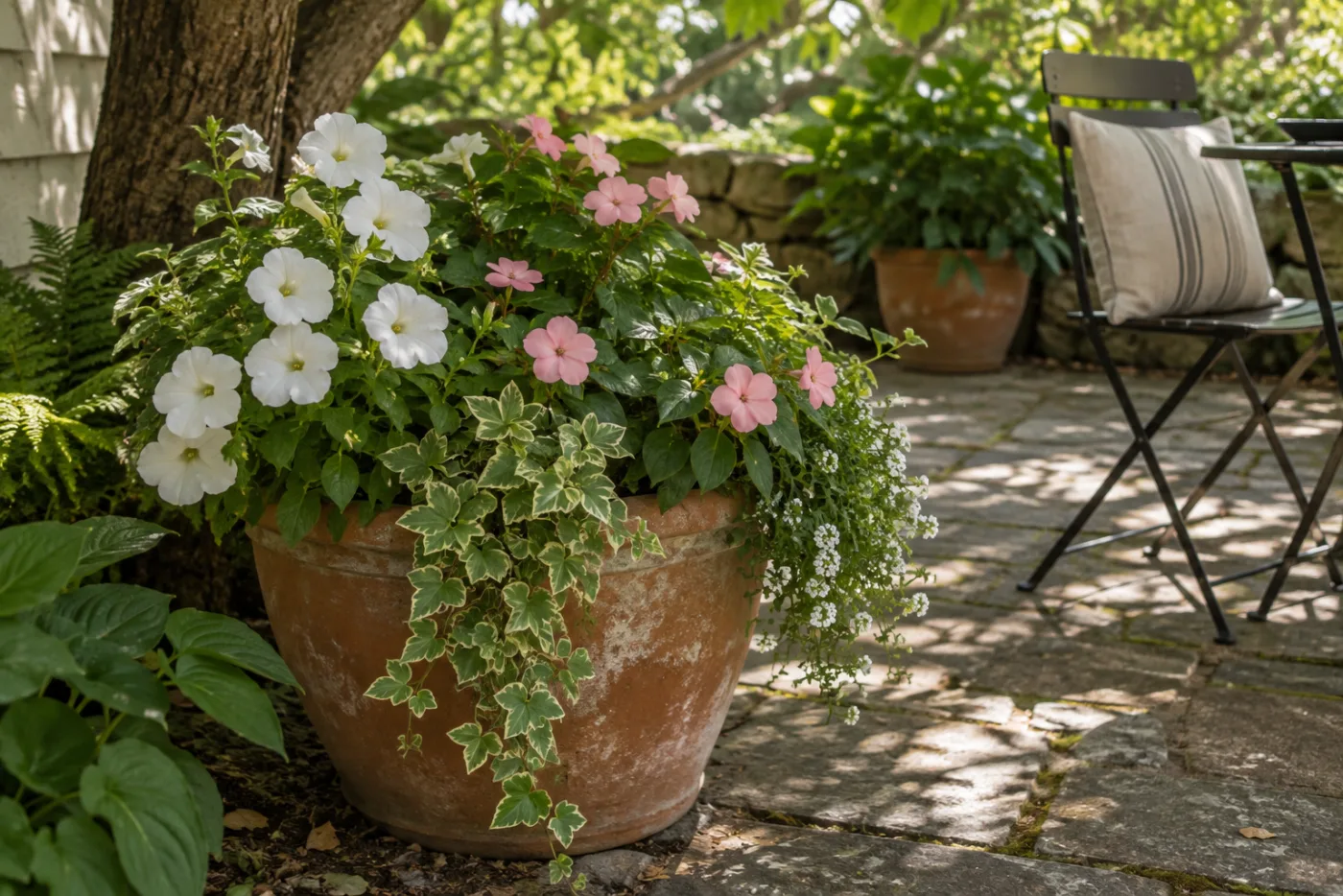
Use observed light, not a hopeful label, to plan a container for a softly lit corner.
Field scope: Part Shade / medium pot / drainage required / late summer. Match plant labels and local conditions before planting.
Part shade covers several different conditions. A corner with gentle morning sun is not the same as one that receives a fierce late-afternoon hour. Watch the site for a few days before buying plants.
Map the light
Note when direct sun reaches the container and when it leaves. Buildings and trees change the pattern through the season. If the spot is consistently dark, choose foliage as the main interest rather than demanding heavy bloom.
Choose a simple structure
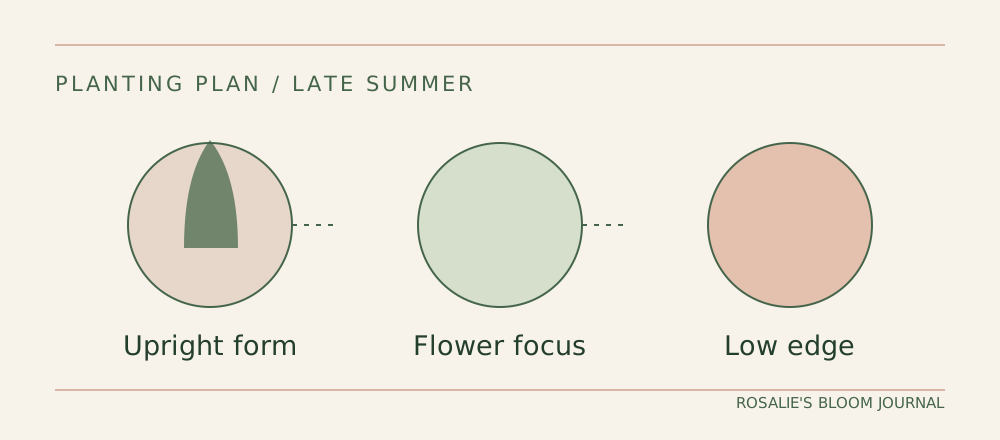
Put one upright plant toward the back, a flowering plant at the center and a low edge plant near the front. Check the labels for compatible light and water needs. The diagram is a layout, not a claim that any three varieties thrive together.
Pot for the actual spot
Use a container with a drainage hole and enough width for the mature spread shown on labels. In a sheltered corner, soil may stay damp longer than it does in full sun. Test below the surface before watering.
Review after two weeks
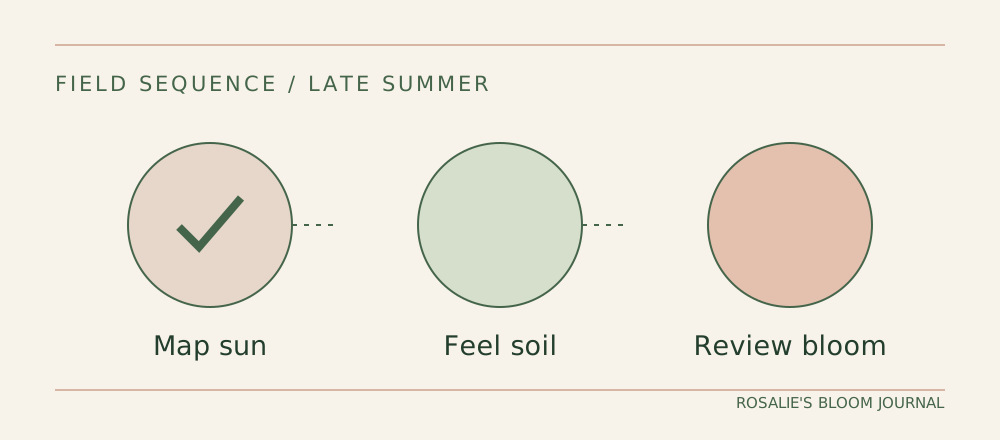
If stems lean, rotate the container only if the plant tolerates being moved. If blooms fade despite healthy leaves, the site may not supply enough light for that variety. Record the result for the next planting.
Read the shade more precisely
Morning light is usually gentler than direct sun late in the day, and a tree's leaf cover can shift through the season. Note the hours of direct light rather than calling the spot simply 'shady.' A plant labeled for part shade may still need several bright hours to flower well. Ask a local nursery for choices suited to your climate and that exact exposure.
If bloom is sparse
First check that the plant is otherwise healthy and has room to grow. Consistently damp mix, poor drainage or crowding can complicate the picture. Do not move a stressed plant into harsh sun all at once to force flowers. Compare the current light with the label and make one measured change, then observe for a couple of weeks before changing something else.