
A late-summer flower refresh
Tidy a tired container by observing first, then removing only what needs to go.
Field scope: Full Sun / medium pot / drainage required / late summer. Match plant labels and local conditions before planting.
By late summer, a container may have healthy new growth beside spent flowers. A small, careful refresh is often more useful than replacing everything. First check the plant's own care guidance; not every species benefits from the same pruning.
Separate spent from struggling
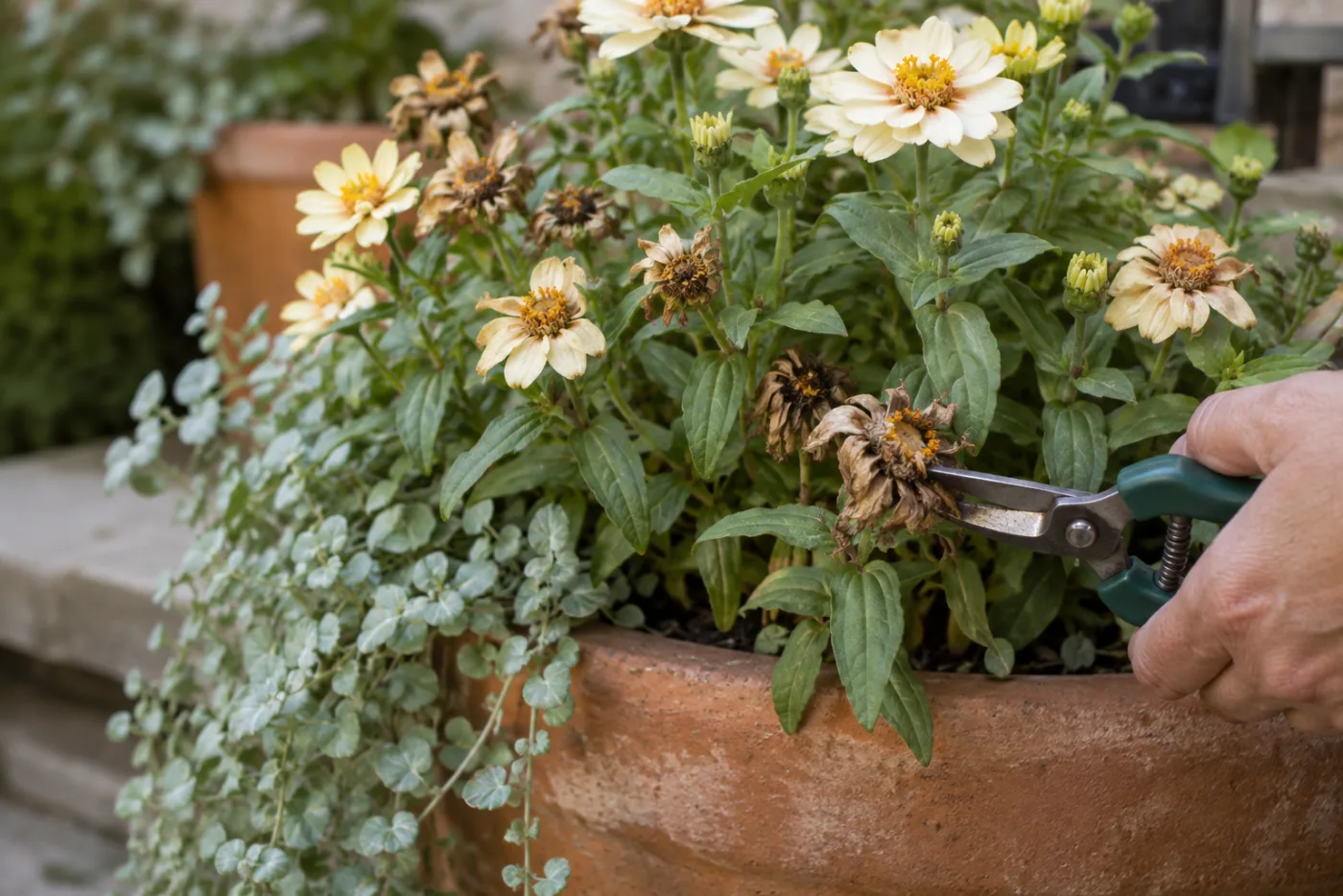
Faded blossoms can be removed where the plant's instructions recommend deadheading. Yellow leaves, dry stems and wilting despite moist soil need closer inspection before cutting. Look for pests and check the root zone without assuming one cause.
Cut cleanly
Use clean sharp snips and avoid tearing healthy stems. For a plant that reblooms after deadheading, follow the stem to the recommended point just above a leaf or bud. Do not shear all plants into the same shape.
Refresh the surface
Remove fallen plant material and loosen only the uppermost crusted mix without damaging roots. Confirm the drainage opening is clear. If roots fill the pot, plan a repot at an appropriate time rather than piling fresh mix on top.
Watch the response
Give the container several days before deciding whether the refresh worked. Record new buds, soil moisture and weather. A plant nearing the end of its seasonal cycle may not rebloom, and that is useful information too.
Know when to leave a flower
Some gardeners leave seed heads for visual interest or to support local wildlife; others remove spent flowers to keep a particular annual blooming. The right choice depends on the plant and your aim. Check whether that species reblooms after deadheading before cutting. If you are unsure, remove only a small portion and observe the response rather than stripping the entire container.
Decide whether to keep the mix
A fading seasonal plant does not automatically mean the potting mix is unusable. Inspect for persistent wetness, compaction, disease signs and a dense mass of roots. If you suspect plant disease, follow local guidance for disposal and cleaning. For a healthy container, replacing some exhausted mix during a seasonal replant may be enough, depending on the plant's needs.