
A simple weekly container-care rhythm
A ten-minute inspection catches dry soil, blocked drainage and tired flowers before they become a larger job.
Field scope: Full Sun / small pot / drainage required / late spring. Match plant labels and local conditions before planting.
A weekly check is a rhythm, not a rigid watering schedule. Weather, pot material, plant size and exposure all change how quickly a container dries. Begin by looking closely instead of watering automatically.
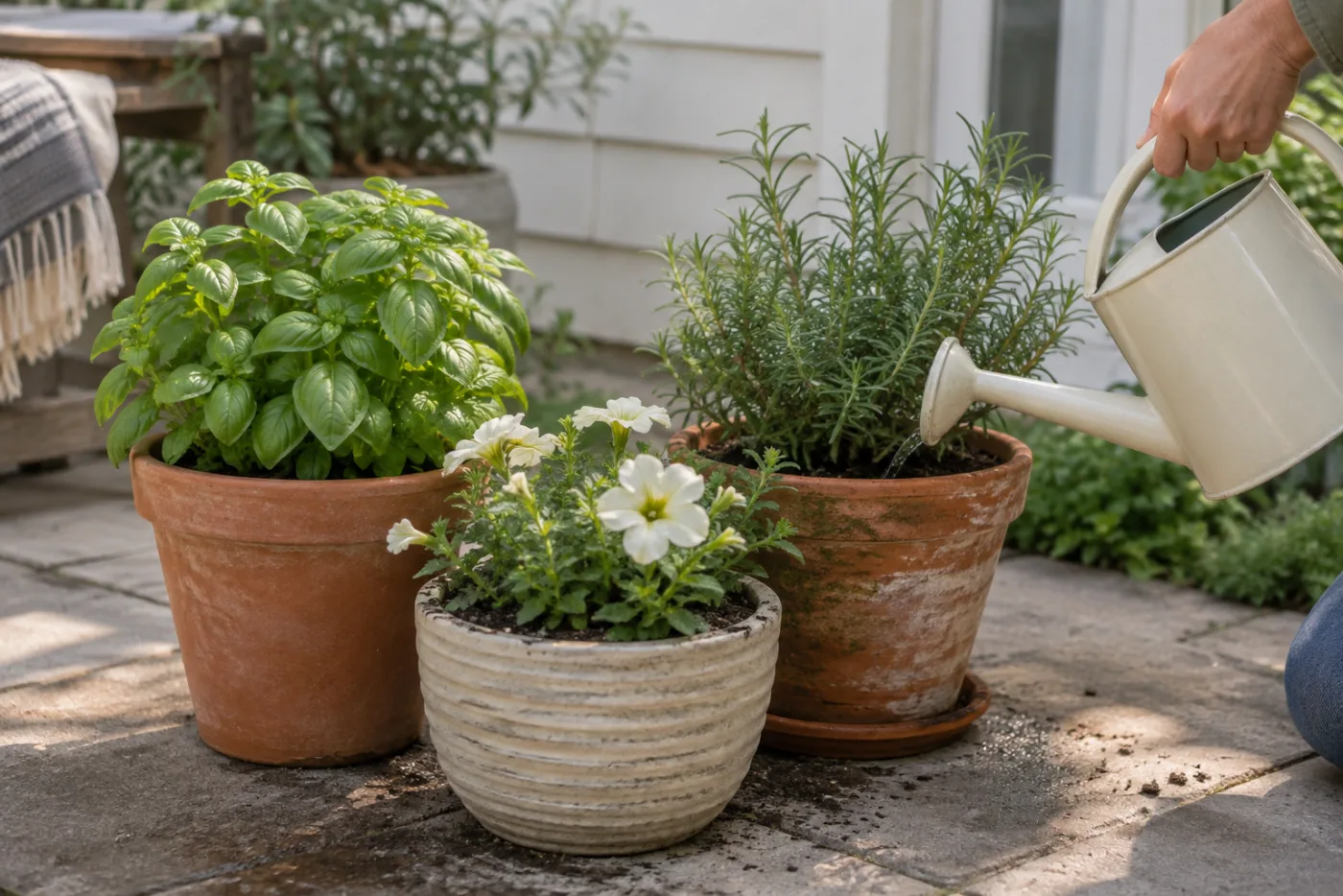
Check below the surface
Touch the mix a little below the top layer. If it is still damp where roots are, wait and check again soon. If it feels dry at that depth, water slowly over the mix until it begins to drain. Very dry mix may need a second slow pass.
Look at leaves and stems
Turn the pot gently to see all sides. Remove damaged leaves and spent flowers where the plant's care instructions recommend it. Notice whether new growth is even or whether one side is reaching strongly toward light.
Clear the exit
Check that water can leave through the drainage hole and that a saucer is not holding water for days. Sweep fallen leaves from the pot surface so they do not hide the soil condition. Keep tools clean between plants with obvious disease symptoms.
Write one useful line
Record the date, weather and what the soil felt like. A short note such as 'north pot stayed damp; south pot dried by Thursday' is more useful than trying to remember every watering later.
When the routine changes
A hot, windy week may call for checks more often than weekly; cool or rainy weather may require less water. If the top looks dry while the mix below is damp, delay watering. If water races down the sides of very dry mix, apply it slowly in stages and confirm the center is moist. The aim is to respond to the pot, not to complete a calendar task.
When something looks wrong
A yellowing leaf is a clue, not a diagnosis. Check moisture, drainage, light and recent weather before adding fertilizer or cutting back the plant. Photograph the change and compare it a few days later. If you see pests or spreading damage, consult a reliable local extension resource or the plant supplier for that particular species rather than treating every problem with the same remedy.