
What to record in a seasonal bloom journal
A few repeatable observations make next season's container choices easier.
Field scope: Part Shade / small pot / drainage required / summer. Match plant labels and local conditions before planting.
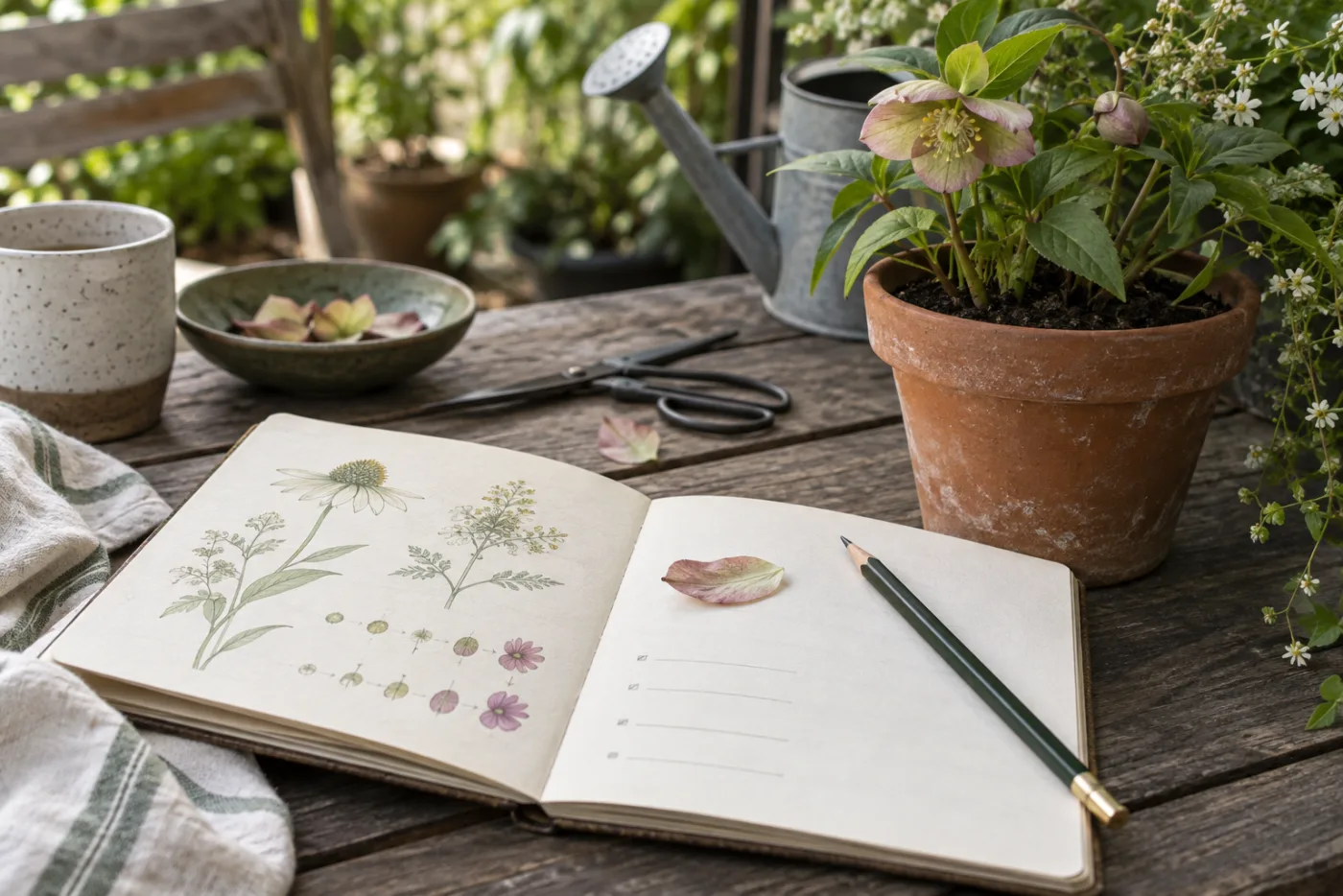
A garden journal does not need perfect drawings or daily entries. Its job is to capture details that are easy to forget: which corner got hot, which pot dried first and when a flower really began to open.
Give every pot a simple name
Use a location and number, such as 'back step 1.' Record the pot size, drainage setup and the names printed on plant labels. Tuck a photo of the label into the notebook or save it with your digital note.
Record conditions, not just outcomes
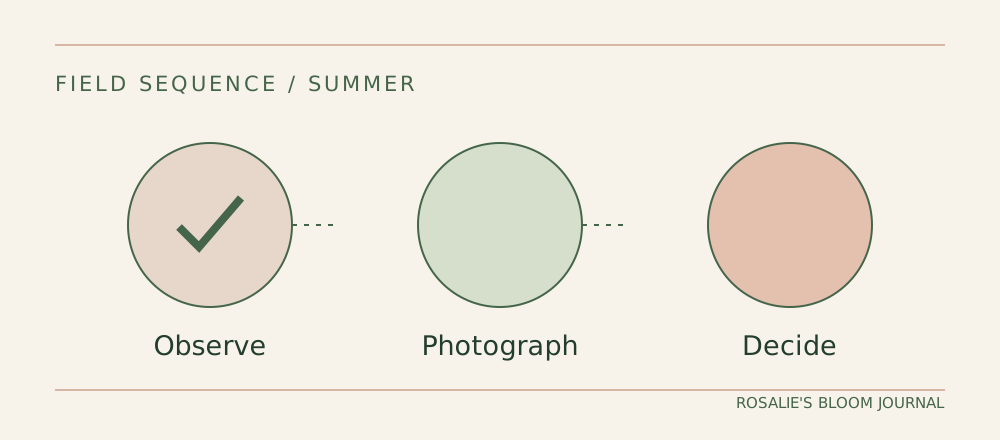
Note approximate hours of direct light and the weather during a change. A plant wilting on a hot afternoon tells a different story from one wilting every cool morning. Write what you observed before deciding why it happened.
Mark firsts and lasts
The first open flower, a pause in bloom and the date you removed a plant all help you plan a sequence for next year. Add one photograph from the same angle each month if that is easier than sketching.
End with one decision
At month's end, write one sentence: keep this combination, move it, use a larger pot or try a different color. That decision turns a record into a practical plan.
A page that is easy to repeat
Use the same four lines each time: date, location, light and change noticed. Add a fifth line only when it helps, such as a watering note or first bloom. This makes entries comparable without turning the notebook into homework. A monthly photo from one angle can reveal growth and spacing more clearly than a long description written from memory.
Separate observation from guess
Write 'leaves curled after the hot afternoon' before writing 'needs more water.' The first is something you saw; the second is one possible explanation. Check the mix and drainage before deciding. This small habit prevents a journal from becoming a list of confident but untested diagnoses. At season's end, circle the decisions that actually improved the container.