
Winter pot care starts in autumn
A short autumn inspection helps containers meet wet weather and colder nights in better shape.
Field scope: Part Shade / large pot / drainage required / autumn. Match plant labels and local conditions before planting.
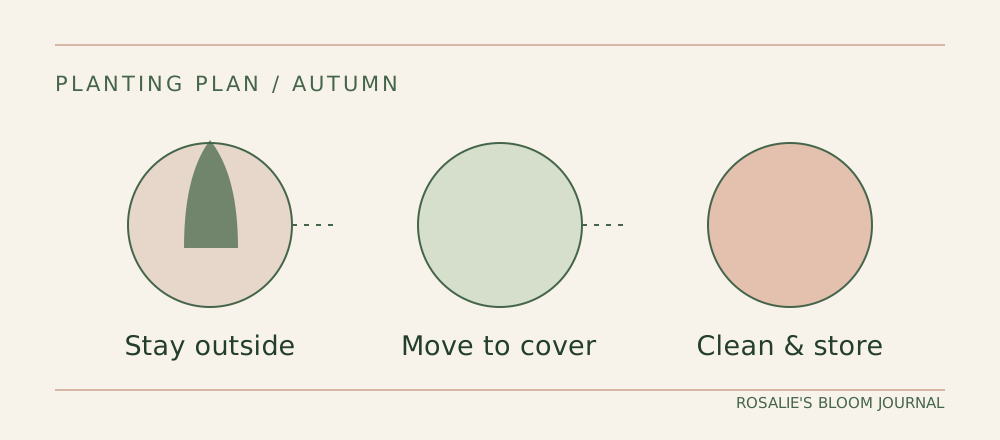
Winter care depends on the plant, pot material and local climate. The dependable first step is an inventory: which containers stay planted, which can move under cover and which should be emptied and cleaned.
Sort before storing
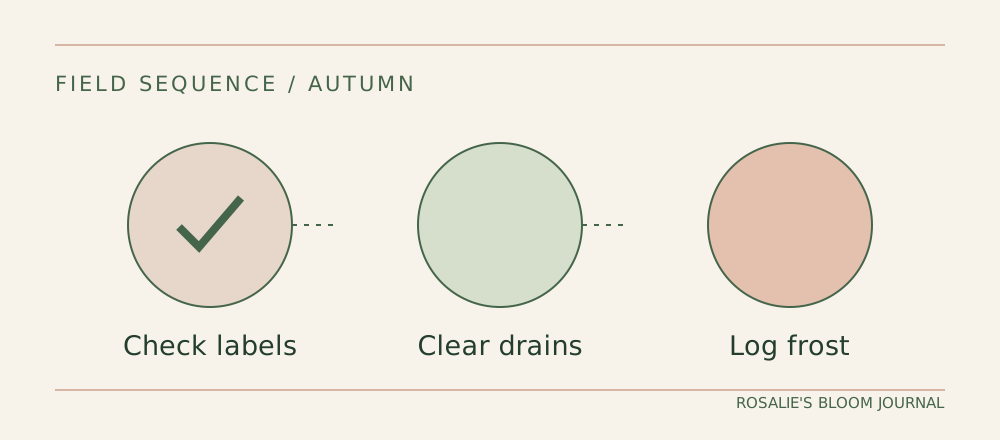
Check plant labels for cold tolerance and local frost guidance. Group pots by whether they stay outdoors, need a protected position or will be emptied. Heavy containers should be moved with appropriate help before the ground is wet and slippery.
Keep drainage open
A pot that holds rainwater can damage roots or the container itself when temperatures fall. Clear holes and empty saucers. Raise containers only with stable supports suited to their weight; avoid creating a tipping hazard.
Clean empty containers
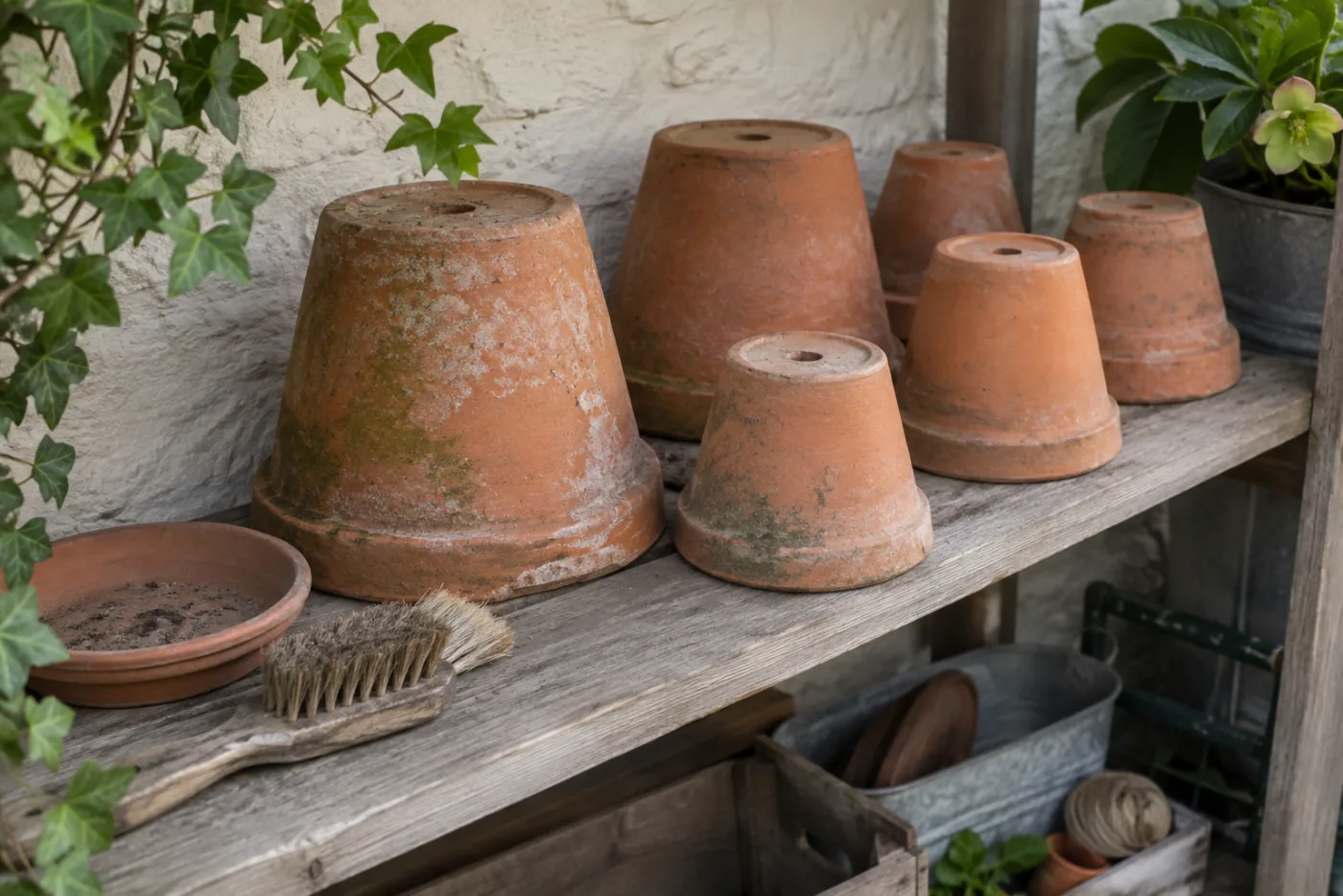
Brush out loose mix, wash and dry containers according to their material. Inspect for cracks before stacking. Store fragile clay where it will not remain saturated or freeze repeatedly; manufacturer guidance takes priority for specialty finishes.
Leave a note for spring
Record what will remain planted and where empty pots were stored. Add the date you first saw frost or a sustained rainy stretch. Next year, those details will make the autumn transition much less guesswork.
Protect the pot as well as the plant
A container's material may be less cold-tolerant than the plant inside it. Read the maker's guidance for ceramic, glazed and composite pots, especially if rain can saturate them before a freeze. Avoid sealing a planted pot in a way that traps water. When moving heavy containers, use a stable dolly or help from another person rather than lifting beyond what is comfortable.
Revisit after storms
After heavy rain or wind, check that supports are still level, drainage holes are not blocked and empty pots have not collected water. Look for soil washed away from a planted container and replace it gently if roots are exposed. A brief inspection after the first cold spell is more useful than a single autumn clean-up that is never revisited.